

“My Dentist Said I Need an Orthodontist – Now What?” A Guide for Albuquerque Families

So your dentist just dropped those words at your last checkup: “You should really see an orthodontist.”
Maybe it was for your kid. Maybe it was for you. Either way, you left that appointment with a referral slip, a head full of questions, and absolutely no idea what happens next.
If you live in Albuquerque, you’re in luck – the city has a solid network of orthodontic specialists, but navigating that world when you’ve never done it before can feel overwhelming. This guide answers the exact questions people type into Google at 11 PM after that dentist visit. No fluff. No filler. Just answers.
What’s the Difference Between a Dentist and an Orthodontist in Albuquerque?
This is the most common question, and it’s a fair one – especially since some dental offices in Albuquerque advertise both general dentistry and “orthodontic services” in the same place.
Here’s the straight answer:
Your general dentist is your oral health quarterback. They handle cleanings, fillings, crowns, root canals, extractions, and overall mouth health. They’re trained to spot problems – including issues with how your teeth are aligned – and refer you to the right specialist.
An orthodontist is a dentist who went back to school for two to three additional years specifically to study how teeth, jaws, and facial structure relate to each other. Their entire focus is on moving teeth and correcting bite problems. They do not do fillings. They do not do root canals. They do one thing, and they do it deeply.
When your Albuquerque dentist refers you to an orthodontist, they’re saying: this is beyond cleaning and maintenance – this needs a specialist.
Why Did My Dentist Refer Me? The Most Common Reasons in Albuquerque Patients
Dentists in Albuquerque refer patients to orthodontists for a variety of reasons. Some are obvious. Some surprise people.
For kids and teens:
- Crowding – teeth coming in overlapping or at angles because there isn’t enough room
- Spacing issues – gaps between teeth that aren’t closing naturally
- An overbite, underbite, or crossbite that affects chewing or speech
- Teeth that aren’t falling out or coming in on the expected schedule
- Thumb-sucking habits that have shifted jaw development
For adults:
- Bite problems that weren’t corrected in childhood – or that have shifted over decades
- Teeth that have drifted after wisdom tooth removal
- Jaw pain or headaches tied to how upper and lower teeth meet (the “occlusion”)
- Cosmetic concerns – wanting a straighter smile before a wedding, promotion, reunion, or simply because you finally decided it’s time
Here’s something people don’t often know: about one in four orthodontic patients in the U.S. is an adult. If you’ve assumed braces are just for teenagers, that assumption is worth revisiting. Albuquerque orthodontists routinely treat patients in their 30s, 40s, 50s, and beyond.
What Happens at Your First Orthodontic Appointment in Albuquerque?
The first visit – often called a consultation or an initial exam – is not a commitment. It’s information-gathering. Here’s what typically happens:
1. X-rays and photos: The orthodontist will likely take a set of X-rays (panoramic and sometimes 3D imaging) and photos of your teeth and bite. This is how they see what’s happening beneath the surface – where roots are sitting, whether there are impacted teeth, how the jaw joints are positioned.
2. A thorough exam: They’ll look at your bite from multiple angles, check jaw movement, and assess your overall oral health. Some Albuquerque orthodontists coordinate with your regular dentist before this visit; others review the records you bring.
3. A treatment plan discussion: This is where they explain what they’re seeing and what they recommend. They’ll typically outline options – traditional metal braces, ceramic braces, clear aligners like Invisalign – and give you a timeline and cost estimate.
4. Questions – lots of them: A good orthodontist will make space for your questions. Don’t hold back. Ask about payment plans, what happens if you miss an appointment, how often you’ll need to come in, and what restrictions exist on food or activities. This is the time.
Most first consultations in Albuquerque are free or low-cost, so don’t let the fear of a bill stop you from going.
Braces vs. Clear Aligners: What Albuquerque Patients Are Actually Choosing
Ten years ago, this wasn’t much of a question – braces were braces. Today, Albuquerque orthodontists offer a wider menu than ever, and patients are asking harder questions before they commit.
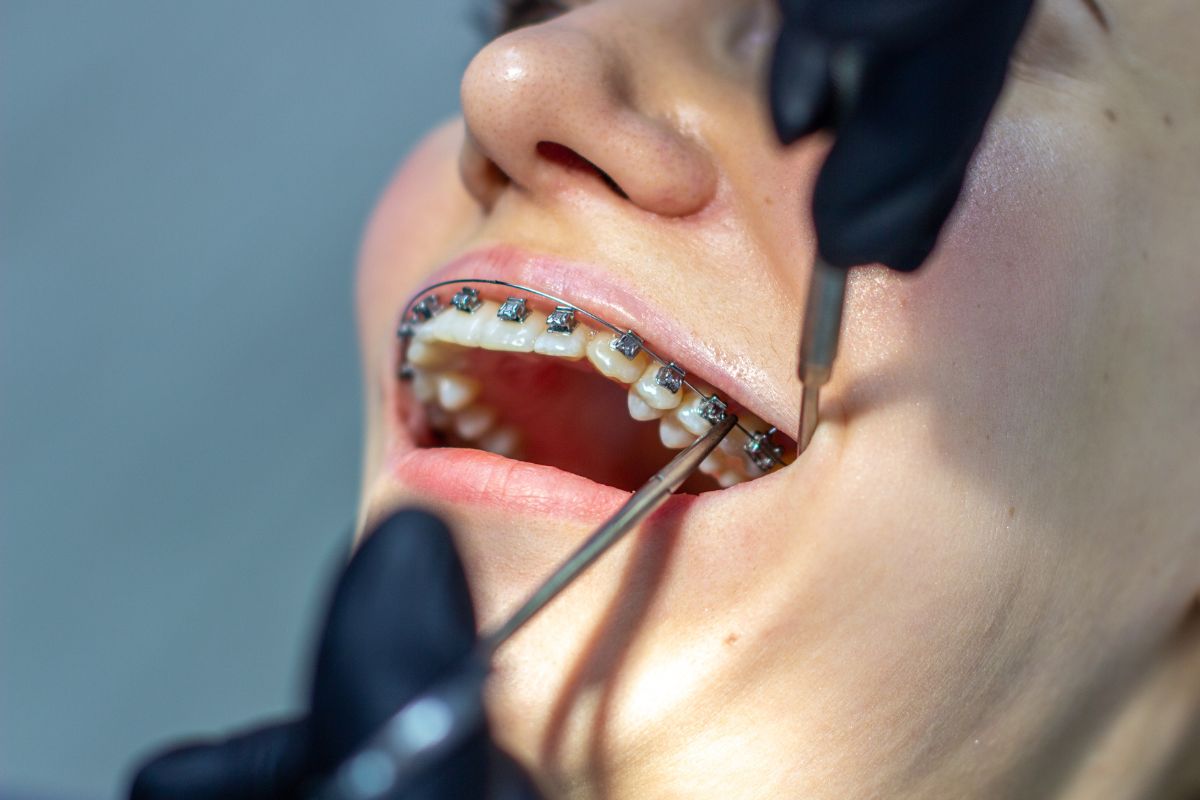
Traditional metal braces remain the most effective option for complex cases. If your child has significant crowding, a jaw discrepancy, or multiple issues that need to be corrected simultaneously, metal braces give the orthodontist the most precise control. They’re also the most durable and typically the most affordable starting point.
Ceramic (tooth-colored) braces work the same way as metal braces but are far less visible. They’re popular with older teens and adults who want the effectiveness of traditional braces without the metallic look. They do stain more easily, so diet matters.
Clear aligners (Invisalign and similar systems) are removable, nearly invisible trays that shift teeth gradually over time. Albuquerque orthodontists frequently recommend these for mild to moderate cases – especially for adults who need to present professionally, athletes in contact sports, or anyone who finds the idea of fixed hardware unappealing. The critical caveat: aligners only work if you wear them. The recommended 20–22 hours per day is not a suggestion. Patients who consistently take them out “just for a bit” routinely extend their treatment by months.
Self-ligating braces are a variation of traditional braces that use a sliding mechanism instead of elastic ties, which some studies suggest can reduce friction and shorten treatment time. Not every Albuquerque orthodontist offers these, but they’re worth asking about.
No single option is right for everyone. The right choice depends on the complexity of your case, your lifestyle, your age, and, yes, your budget.
What Does Orthodontic Treatment Actually Cost in Albuquerque?
Let’s be direct, because this is what most people really want to know.
Most Albuquerque orthodontic practices offer flexible payment plans – often with little or no interest if you qualify – that spread costs over the length of treatment. Treatment typically runs 12 to 24 months, so many families find the monthly payments manageable when broken out that way.
Dental insurance varies enormously. Some plans have orthodontic benefits; others don’t cover orthodontics at all. Check your specific plan before your consultation, and ask the orthodontic office – most have insurance coordinators who can run your benefits in advance.
HSA and FSA funds can typically be used for orthodontic treatment, which is worth knowing if you have those accounts available through work.
One important note: Be cautious of mail-order aligner companies that skip the in-person exam. Albuquerque orthodontists – like orthodontists nationally – have seen patients come in with bite problems and root damage caused by aligners that were prescribed without X-rays or a physical exam. The exam isn’t a formality. It’s how problems get caught before treatment makes them worse.
How to Choose the Right Orthodontist in Albuquerque
Albuquerque has plenty of options. Here’s how to cut through the noise:
Verify they’re a board-certified orthodontist. The American Association of Orthodontists (AAO) has a locator. Board certification means they’ve completed the extra training and passed examinations beyond dental school.
Ask your general dentist. If you have a dentist you trust in Albuquerque, their referral carries weight. Dentists refer to orthodontists they know do good work, because their patients come back to them.
Look at before-and-after cases, not just star ratings. Reviews are helpful, but seeing actual clinical outcomes on cases similar to yours tells you more about capability.
Assess the consultation experience. Did they rush you? Did they answer your questions clearly? Did they explain why they were recommending a particular treatment, not just what? A good orthodontist is a good communicator.
Ask about retention. What happens after the braces come off? Every reputable Albuquerque orthodontist will provide retainers and a retention plan. If that part of the conversation gets skipped, ask directly.
The Bottom Line
Getting referred to an orthodontist by your Albuquerque dentist isn’t a crisis – it’s a handoff to the right specialist. The process is more approachable than most people expect, and the outcomes, when done right, are genuinely life-changing.
A straighter bite isn’t just about aesthetics. It affects how you chew, how you speak, how your jaw feels over decades, and yes – how you feel about your own face. Those things matter.
Start with a consultation. Ask every question you have. And don’t let the unfamiliarity of the process talk you out of something worth doing.
Ready to Take the Next Step? Visit ABQ Orthodontics
At ABQ Orthodontics, we work with patients of all ages across Albuquerque – from kids getting their first screening to adults who have finally decided it’s their turn. Our team takes the time to explain exactly what we’re seeing, walk you through your options honestly, and build a treatment plan that fits your life and your budget.
Your first consultation is free. No pressure. No commitment. Just a clear picture of where things stand and what’s possible.
Schedule your free consultation with ABQ Orthodontics today and take the first step toward a healthier, straighter smile. Call us, book online, or stop by – we’d love to meet you.


New Patients and Emergency Appointments Welcome
Albuquerque East Office
(505) 458-0132
Albuquerque West Office
(505) 451-7349